<?xml version="1.0" encoding="utf-8"?><feed xmlns="http://www.w3.org/2005/Atom" ><generator uri="https://jekyllrb.com/" version="3.10.0">Jekyll</generator><link href="https://dweinz.com/feed.xml" rel="self" type="application/atom+xml" /><link href="https://dweinz.com/" rel="alternate" type="text/html" /><updated>2026-01-31T14:43:10-05:00</updated><id>https://dweinz.com/feed.xml</id><title type="html">David Weinzimmer</title><subtitle>I&apos;m a full-stack software engineer with a background in city planning. Welcome to my web site!</subtitle><author><name>David Weinzimmer</name></author><entry><title type="html">running slowly</title><link href="https://dweinz.com/running-slowly/" rel="alternate" type="text/html" title="running slowly" /><published>2024-09-18T00:00:00-04:00</published><updated>2024-09-19T00:50:00-04:00</updated><id>https://dweinz.com/running-slowly</id><content type="html" xml:base="https://dweinz.com/running-slowly/"><![CDATA[<p><img src="https://dweinz.com/assets/images/you_are_here_atl.webp" alt="morning on the beltline" class="full" /></p>

<p>A little over a month ago, I started running. I don’t even remember how it started, but for whatever reason I gave it a try, like I do every few years. But this time was very different. For the first time ever, I set out on a run without any agenda or goals at all. I ran slowly. I didn’t try to hit a distance, pace, calorie count, or heart rate. I just enjoyed my Spotify shuffle, turned around when I felt like it, and walked when my knees started to hurt.</p>

<p>A couple weeks ago, I realized running had become a real habit, and I posted this on my Instagram story:</p>

<blockquote>
  <p>I didn’t realize how many runs I’d been on until my sister pointed it out yesterday and I told her she was wrong, but she was not 😅</p>

  <p>It’s been about 18 years since I last really loved running. And I am realizing that … well, I need to have compassion for my high school self, but the only reason this is working is that my relationship to running is NOT currently rooted in proving anything to myself. When I started running XC [cross-country] in 9th grade, it came from a place of anger and needing to prove to myself, though what I could accomplish, that I deserved … anything.</p>

  <p>I think a very REASONABLE and usually healthy approach to exercise is to be energized by focusing on growth, “being better than last time,” etc., etc. It’s basically the <em>only</em> framing I hear from a coach in a group fitness class for example.</p>

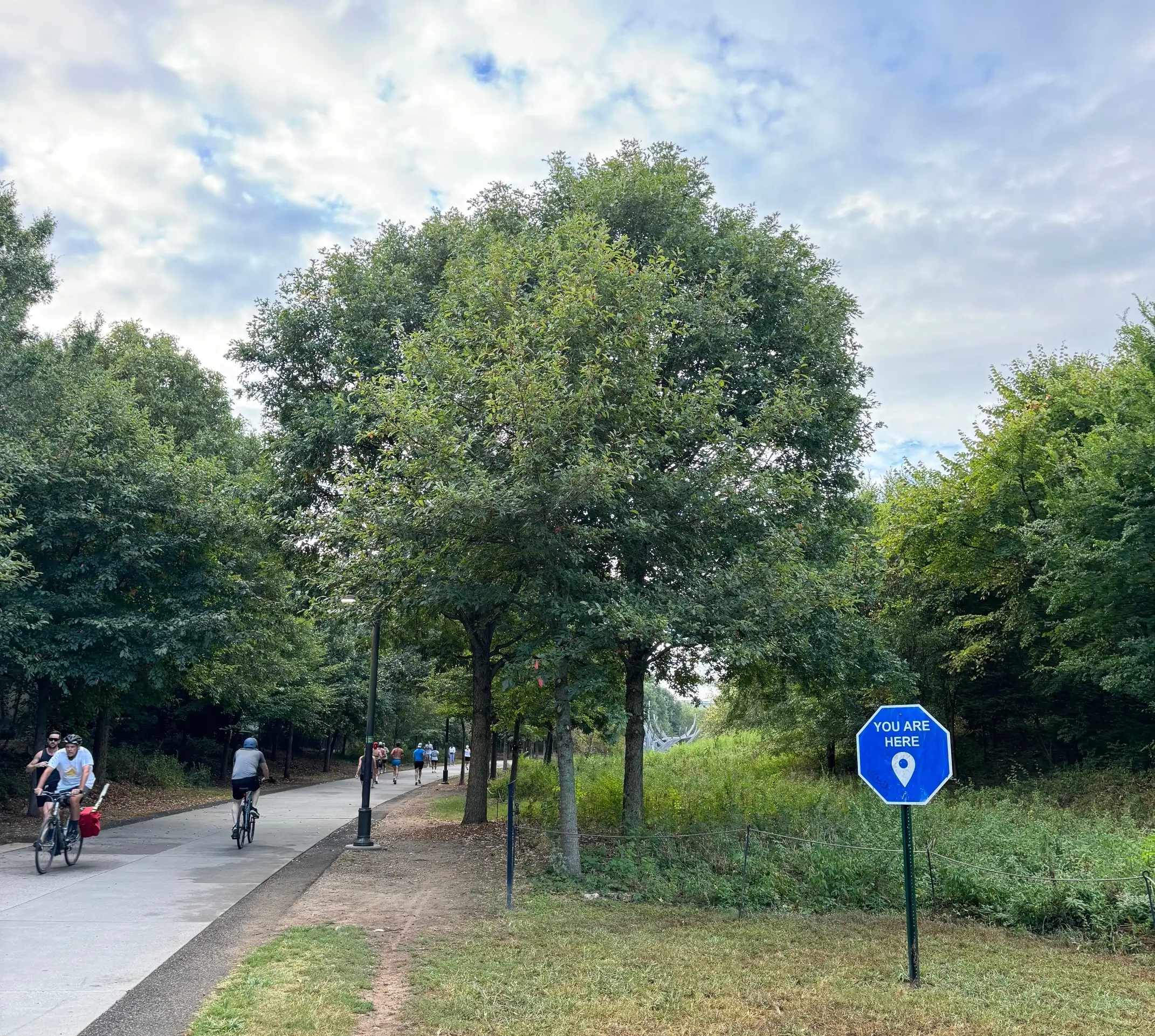
  <p>But it feels very 🤯🤯🤯 to realize that in the year 2024 of our lord, that is not the assignment for me. This has to be joyful, therapeutic, meditative, and a few other jumble of adjectives. I am running SLOW a lot of the time, and enjoying the drug that is Spotify shuffle and all my <em>emotions</em> on running endorphins. I am lip syncing to the songs and doing other things to look ever so slightly the fool at 8:30am on the Beltline. And enjoying the view 🥰</p>

  <p>I hope it continues to be lovely.</p>
</blockquote>

<p>And so far it has. It continues to change. I’ll have euphoric moments, like <a href="https://www.youtube.com/watch?v=Jl8iYAo90pE">“Caribbean Blue” by Enya</a> coming on and reminding me of some of the most joyful moments of <a href="https://www.netflix.com/title/80238565">Derry Girls</a>; <a href="https://www.youtube.com/watch?v=NJsa6-y4sDs">“I’m Alive” by Céline Dion</a> cracking me up because it’s so silly, or <a href="https://www.youtube.com/watch?v=AzaTyxMduH4">“Pour que tu m’aimes encore”</a> putting me in full diva mode.</p>

<p>I’ve also had a lot more miles to gently contemplate the anger and hurt that propelled me the last time I was a runner. I realize I didn’t actually love running 18 years ago. What I loved was knowing that I could push myself harder than two thirds of my classmates. That even though I wasn’t a “real” athlete, I could place higher (why did I need this? But I did.). I’ll listen to a song like <a href="https://www.youtube.com/watch?v=MLeShs4-4g0">“Who I Am” by Wyn Starks</a> and be overwhelmed:</p>

<blockquote>
  <p>Looking back, back on that little boy, <br />
Never game him a chance to ever be more. <br />
I didn’t love him, but I’m gonna love him <br />
Right now and forever, it’s time to push open the door.</p>
</blockquote>

<p>Running has given me the space to feel, and slowly put into fragments of words and thoughts, some unified understanding of who I am and what shaped me. The years of hurt and isolation; my political identity and lineage; how I navigate the deep contradictions of this moment; my values, and what “honesty” means to me. And then, thank god, a disco hit comes on on shuffle to infuse some joy and remind me that I’m right on time with nowhere to be but here. Running is there for me as a balm and an activity in which I find joy and meaning, not as a tool to be used to an end.</p>

<p>My life had been feeling a bit on autopilot, but running has been one of the ways I’ve rediscovered this summer that I can surprise myself. I don’t feel like I’ve ever known myself as well as I do, this 18th of September 2024. And, I’m looking forward to waking up at 7am tomorrow and running to the edge of Piedmont Park, without any agenda, but with faith that I will keep on learning, thinking, and feeling.</p>]]></content><author><name>David Weinzimmer</name></author><summary type="html"><![CDATA[I've rediscovered joy in running by running slowly.]]></summary></entry><entry><title type="html">On Native Land</title><link href="https://dweinz.com/on-native-land/" rel="alternate" type="text/html" title="On Native Land" /><published>2020-11-25T00:00:00-05:00</published><updated>2020-11-25T20:00:00-05:00</updated><id>https://dweinz.com/on-native-land</id><content type="html" xml:base="https://dweinz.com/on-native-land/"><![CDATA[<p><em>I wrote the post below originally on Facebook this past summer after looking up for the first time in my adult life the Indigenous land that I grew up on. You can do the same at <a href="https://native-land.ca/">https://native-land.ca/</a>.</em></p>

<p>After becoming a state, in the California State Legislature’s first session in 1850, white legislators passed the Act for the Government and Protection of Indians. This law allowed any white person to apply to the Justice of the Peace for the removal of indigenous people from lands the white person “owned.” It also allowed any white person to obtain indigenous children for indentured servitude.</p>

<p>Over the first 15 years of California’s statehood, the state removed indigenous people from their land by military force. Between 1851 to 1859, the state comptroller tracked $1.3 million in claims for “expeditions against the Indians” (about $43 million in 2020 dollars).</p>

<p>In May of 1851, the Chochenyo Ohlone land I grew up on (as well as that of many other tribes) was transferred to the State of California in Cession 281, a swath of land encompassing all of Contra Costa and Alameda Counties, and stretching directly across the Central Valley all the way to the Sierras. This land was transferred to California in exchange for “a tract of land on the Stanislaus River,” in one of 18 similar treaties signed in 1851-1852 between the United States Indian Commissioners and the tribes. In March of 1852, both houses of the California Legislature overwhelmingly voted to submit resolutions to the US Senate opposing the ratification of those treaties, over concerns about any land being permanently transferred (as reservations) to indigenous people, making it “utterly impossible to prevent the continued collisions between the miners and the Indians.” The legislature proposed instead that, outside of any binding treaty, indigenous people be paid in “provisions and clothing,” and be given parcels of land “sufficient for them to cultivate,” noting that this would avoid “the contemplated permanent disposal of a large portion of our mineral and arable land [to the Indians]”. As a result, none of the 18 treaties were ratified by Congress. All votes on the treaties were in closed sessions, and the treaties were kept secret until 1905.</p>

<p>“That a war of extermination will continue to be waged between the races, until the Indian race becomes extinct, must be expected. While we cannot anticipate this result but with painful regret, the inevitable destiny of the race is beyond the power or wisdom of man to avert.”
Governor Peter H. Burnett, January 7, 1851. Burnett was the first governor of California. Burnett Avenue in the Haight-Ashbury District is named after him.</p>

<p>The source for most quotes here is this <a href="https://www.library.ca.gov/Content/pdf/crb/reports/02-014.pdf">1992 California Research Bureau report</a>.</p>]]></content><author><name>David Weinzimmer</name></author><summary type="html"><![CDATA[I wrote the post below originally on Facebook after looking up the Indigenous land that I grew up on. You can do the same at https://native-land.ca/.]]></summary></entry><entry><title type="html">How to choose a coding bootcamp</title><link href="https://dweinz.com/how-to-choose-coding-bootcamp/" rel="alternate" type="text/html" title="How to choose a coding bootcamp" /><published>2018-07-24T00:00:00-04:00</published><updated>2018-07-12T23:50:00-04:00</updated><id>https://dweinz.com/how-to-choose-coding-bootcamp</id><content type="html" xml:base="https://dweinz.com/how-to-choose-coding-bootcamp/"><![CDATA[<figure style="width: 300px" class="align-right">
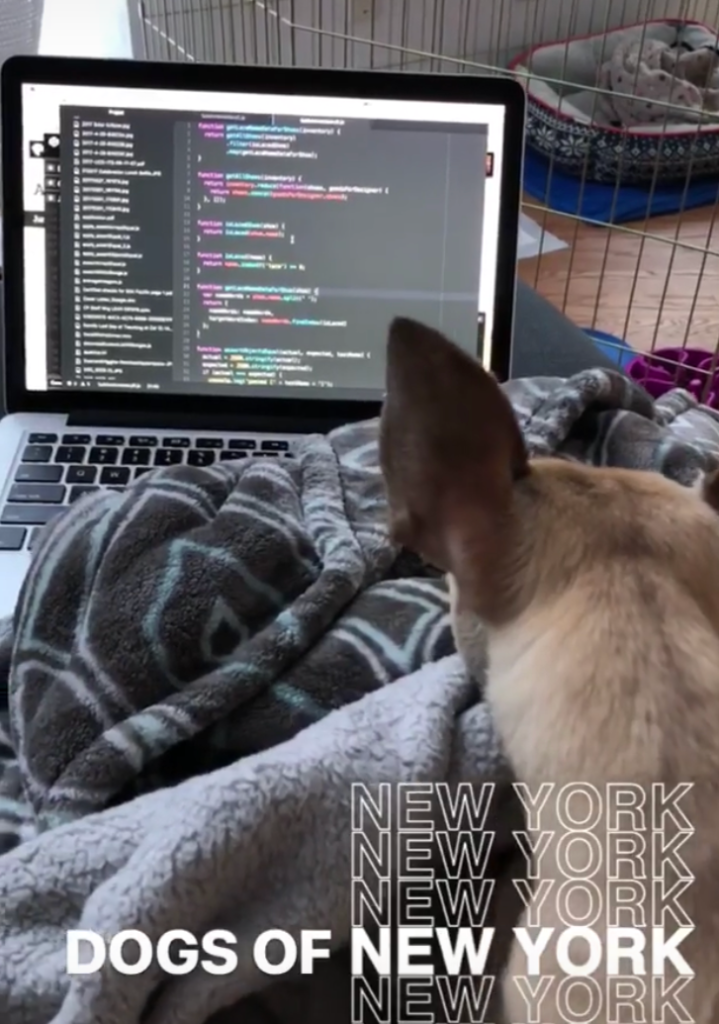
  <img src="https://dweinz.com/assets/images/spicedrop-coding.webp" alt="my dog at my computer" />
  <figcaption>Spicedrop studying JavaScript</figcaption>
</figure>

<p>You got into some coding bootcamps. How should you choose which one to go to? Advice from an alum on what questions you should ask.</p>

<p>I attended a coding bootcamp (Hack Reactor, now <a href="https://www.galvanize.com/">Galvanize</a>) in Fall 2018. I’m very happy with my decision, but it wasn’t easy! I got into multiple programs here in New York City, and had a hard time figuring out which coding bootcamp would work best for me. The experience inspired me to write a blog post about advice I’d shared with friends many times before about <a href="/how-to-choose-a-grad-school-program/">questions to ask when choosing a grad school program</a>, and now that I’ve reflected on my bootcamp decision I want to share the questions that were most helpful to me for that as well.</p>

<p>First and foremost, as with any educational program, <strong>the most useful answers to your questions will come from current students and recent graduates who did the program in the same city as you.</strong> Ask the schools to connect you with students, show up to their events, and even send LinkedIn messages to recent alums (I had some success with all of these).</p>

<p>In addition to asking these questions, I went to on-campus events for all the programs I was admitted to while I was studying to prepare for their application processes. Programs will typically have mini-bootcamps, “JavaScript 101,” or some type of study hall to provide you an opportunity to check out the campus, meet people, and ask questions. The events are a great way to find people to ask questions to as well — the mini-bootcamps I went to were all taught be recent graduates.</p>

<p>Specifically in choosing a coding bootcamp, these were some of the most important questions for me in making a decision.</p>

<h2 id="people">People</h2>

<ul>
  <li>How did you like your cohort?</li>
  <li>Class sizes:
    <ul>
      <li><em>To admissions representatives:</em> How big are the class sizes? What is the student-instructor ratio?</li>
      <li><em>To students:</em> How did you feel about the class sizes? Was having a larger/smaller class size a benefit or a drawback to you?</li>
    </ul>
  </li>
  <li>How do you feel about the quality of the instructors?</li>
  <li>Does the school encourage people to stay healthy and take care of themselves during the program?</li>
</ul>

<h2 id="curriculum">Curriculum</h2>

<p>Before you ask people questions, do as much of your own research as you can. One thing to make a note of is how many hours per week each program is. You can also find details on the curriculum online, though it’s still helpful to get students’ impressions of how comprehensive it was.</p>

<ul>
  <li>How do you feel about the quality of the curriculum?</li>
  <li>How comprehensive is the curriculum? For example, how many of the most popular front-end and back-end frameworks does the curriculum cover?</li>
  <li>How much time does the program spend on learning algorithms? (<em>Note: these are critical for interviews! The amount of time different bootcamps spend on algorithms varies a lot.</em>)</li>
  <li>Does the curriculum cover just one language (e.g., JavaScript) or more than one?
    <ul>
      <li>If your program taught more than one language, how helpful was that?</li>
      <li>If your program taught one language, what impact did that have? Does it make enough difference that you would have chosen a different school?</li>
    </ul>
  </li>
</ul>

<h2 id="job-search-and-alumni">Job Search and Alumni</h2>

<ul>
  <li>Did you feel like you were interview-ready at the end of the coding bootcamp, or was there more work that you needed to do?</li>
  <li>What are the school’s relationships with employers like?</li>
  <li>Alumni base:
    <ul>
      <li><em>To admissions representatives:</em> How many local alumni are there?</li>
      <li><em>To recent alums:</em> Given that the local alumni base is relatively large/small, how much did that impact your job search?</li>
    </ul>
  </li>
  <li>What kind of help does the career services provide?</li>
  <li>How helpful was the career services help? Were there things you wish they would have done that they didn’t?</li>
  <li>Did most of your cohort have success finding jobs quickly?</li>
</ul>

<h2 id="financing">Financing</h2>

<p>For coding bootcamps, information on financing/loans is generally prominently displayed on the website. If you do have questions about the possibility of payment plans, whether there are scholarships, etc., it never hurts to ask the admissions representative.</p>]]></content><author><name>David Weinzimmer</name></author><summary type="html"><![CDATA[You got into some coding bootcamps. How should you choose which one to go to? Advice from an alum on what questions you should ask.]]></summary></entry><entry><title type="html">How to choose a grad school program</title><link href="https://dweinz.com/how-to-choose-a-grad-school-program/" rel="alternate" type="text/html" title="How to choose a grad school program" /><published>2018-07-12T00:00:00-04:00</published><updated>2018-07-12T23:50:00-04:00</updated><id>https://dweinz.com/how-to-choose-a-grad-school-program</id><content type="html" xml:base="https://dweinz.com/how-to-choose-a-grad-school-program/"><![CDATA[<figure style="width: 300px" class="align-right">
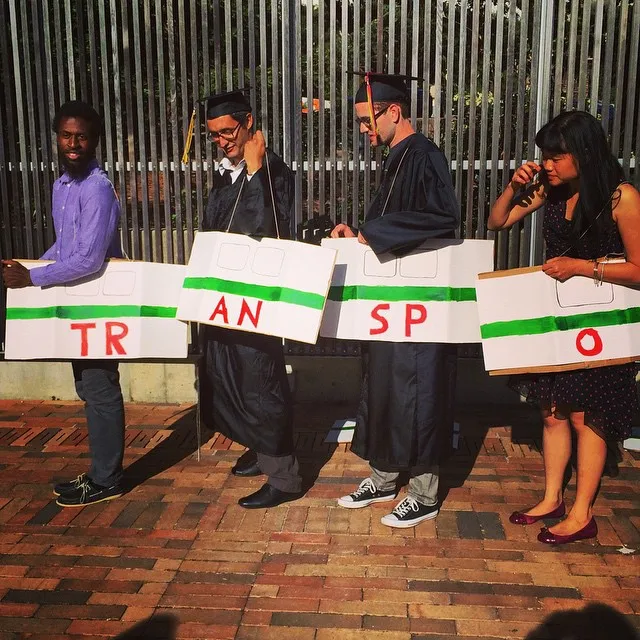
  <img src="https://dweinz.com/assets/images/transpo-graduation.webp" alt="transportation graduation" />
  <figcaption>Transportation plannerds at graduation</figcaption>
</figure>

<p>When I applied to grad school in city planning in 2011, I spent a long time researching schools. I whittled down my list to the six that I applied to. When spring came and I got accepted to multiple schools, I realized I had a difficult decision to make! These are adapted from the questions I wrote down after I decided to attend <a href="https://ced.berkeley.edu/city">UC Berkeley’s Department of City &amp; Regional Planning</a> (go bears!).</p>

<p><strong>You should be asking questions to current students or recent graduates.</strong> Things change quickly, but current students’ experience is the best indicator of what your experience will be. Meet students at an Admitted Students Day, ask the department to put you in touch, or send messages to people through LinkedIn/Twitter/etc. and ask them to chat with you.</p>

<p>This list is based on my experience comparing grad schools for master of city planning programs and M.S. transportation engineering programs (I ended up doing a dual degree). Much of this is generalizable to other grad programs.</p>

<h3 id="people">People</h3>

<ul>
  <li>How do you like your cohort?</li>
  <li>Are professors accessible to students?</li>
  <li>What does the department do to support diversity? Is there a student group for students of color? Is the department responsive to students’ or student groups’ concerns about department curriculum and student diversity/scholarships?</li>
</ul>

<h3 id="curriculum">Curriculum</h3>

<ul>
  <li>How extensive are the core requirements / how much room do you have for electives? Are students encouraged to go to other departments to take electives?</li>
  <li>Where in particular outside the department do students tend to take classes?</li>
  <li>Does the program require a thesis, a client project, or give you different choices for your capstone project? If a thesis is required, how do you feel about that?</li>
  <li>To what extent does the program encourage you to work and collaborate across disciplines? Are there strong relationships with other departments on campus?</li>
</ul>

<h3 id="professional-development--support-and-alumni">Professional Development &amp; Support and Alumni</h3>

<ul>
  <li>How much do students engage off-campus in internships, jobs, etc.?</li>
  <li>What kind of resources or services does the school provide to help with getting jobs or internships?</li>
  <li>Do students tend to find jobs relatively quickly after graduating?</li>
  <li>How strong is the alumni network, and how formalized are the department’s relations with them? Is there a database of alums?</li>
</ul>

<h3 id="financial-aid--on-campus-jobs">Financial Aid &amp; On-Campus Jobs</h3>
<p>This is <em>very</em> important to ask <em>current</em> students about! Even well-intentioned staff and admissions reps aren’t as well positioned to give you the best information sometimes, if only because they don’t want to make false promises to you. Current students can tell you how they are making their finances work, and what tends to work out for them and their peers (including which departments are always hiring TAs!).</p>

<ul>
  <li>How easy/common is it for students to get Research Assistant positions, and how much financial support do those provide?</li>
  <li>Are there other on-campus jobs that students take, such as being a Teaching Assistant? What level of funding do those provide?</li>
  <li>How plentiful are travel and research grants (including for conferences)?</li>
</ul>

<h3 id="location">Location</h3>

<ul>
  <li>How much do you like living there?</li>
  <li>Do your classes take advantage of the city you are in (e.g., doing studio classes about the surrounding community, partnering with local industry, etc.)? Or does the program have a less local and more national/international focus.</li>
</ul>

<h3 id="general">General</h3>

<ul>
  <li>What are the biggest weaknesses in the grad school program?</li>
  <li>What is the funding situation of the department itself, and how does that actually affect you as students (i.e., does the department feel vulnerable to budget cuts)?</li>
</ul>

<p>That’s all! Good luck. I loved my graduate program and most of the jobs I had afterward, until one that propelled me to go to a coding bootcamp to change careers and become a software engineer. If you’re curious, check out my post on <a href="/how-to-choose-coding-bootcamp/">how to choose a coding bootcamp</a>.</p>]]></content><author><name>David Weinzimmer</name></author><summary type="html"><![CDATA[These questions are adapted from the ones I wrote down after I decided to attend UC Berkeley’s Department of City & Regional Planning (go bears!).]]></summary></entry><entry><title type="html">descansen en paz</title><link href="https://dweinz.com/descansen-en-paz/" rel="alternate" type="text/html" title="descansen en paz" /><published>2016-06-14T00:00:00-04:00</published><updated>2016-06-14T23:50:00-04:00</updated><id>https://dweinz.com/descansen-en-paz</id><content type="html" xml:base="https://dweinz.com/descansen-en-paz/"><![CDATA[<p><img src="https://dweinz.com/assets/images/orlando_memorial_sanfrancisco_castro.webp" alt="memorial in the castro" class="full" /></p>

<blockquote>
  <p>— I don’t feel like everything is just going to feel better tomorrow.<br />— I don’t think so.</p>
</blockquote>

<p>It has been just two full days. It feels so long. Yesterday, I woke up around 9am. I was in Los Angeles with my boyfriend, who had just finished AIDS/LifeCycle, a 545-mile ride to raise funds and bring awareness to end HIV/AIDS. He was overheated. As I looked at my phone while he half-slept, I saw the news, and I started crying. I alternated between crying on him and getting up to go to the sink to get water to cool him down.</p>

<p>I read twenty minutes later how an arsenal of assault weapons had been found 7 miles west of us, in Santa Monica. The man who owned them had intended to bring them to where I had been getting a drink just 9 hours earlier, to kill people like me.</p>

<p>Over the next 380 miles driving home I cried on him. I don’t remember what I cried to as we fell asleep last night, but I know I did.</p>

<p>Sleeping didn’t make anything go away. I had been checking the City of Orlando’s page to see if Chris Leinonen, the son of the mother interviewed on TV, was among the names posted, or his boyfriend, Juan Guerrero. In the morning it was confirmed that they both were among those who had died. My boyfriend woke up to me crying over <a href="https://www.instagram.com/p/_uwPumEvMB/">their picture</a>.</p>

<p>I got to work at 9:23. I cried at my desk for the first time at 9:35. At 9:59 my manager saw me in the hallway, and walked toward me with a sympathetic expression. I burst into tears.</p>

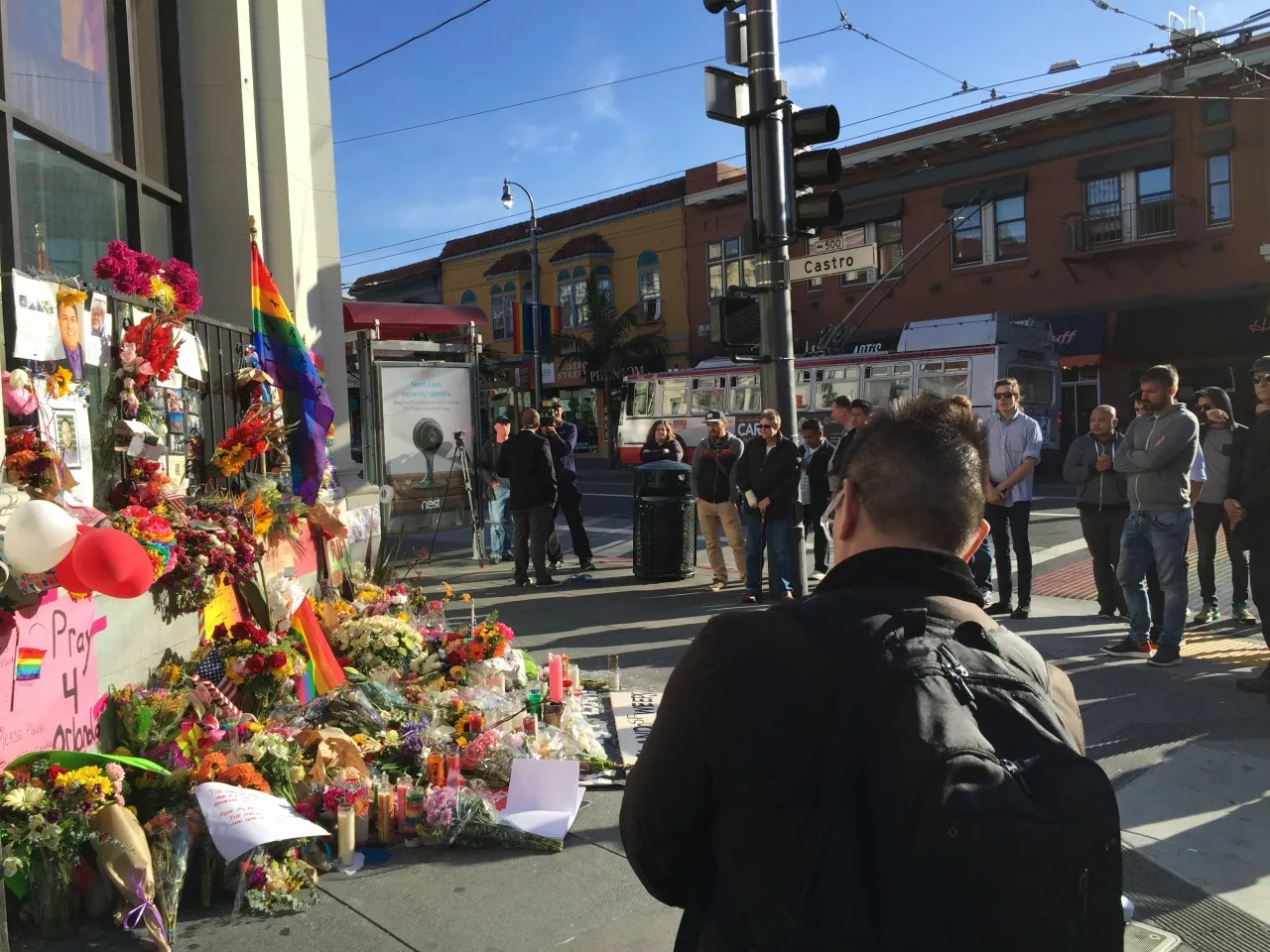
<p>I read all your names today, every one of you whose names were in the BuzzFeed article at 3pm, I read on the grand staircase of San Francisco City Hall. I said the Mourner’s Kaddish for you. I brought flowers to the corner of 18th and Castro for you. I had a hard time choosing which bouquet to buy for you, and then I saw that the colorful one I had first been drawn to was called the Buena Vida bouquet.</p>

<p>Descansen en paz.</p>

<p><em>this post was originally published on my previous blog on June 14, 2016</em></p>]]></content><author><name>David Weinzimmer</name></author><summary type="html"><![CDATA[It has been just two full days. It feels so long. (my thoughts a few days after the Pulse nightclub shooting)]]></summary></entry></feed>